Engine & Power · Buyer's Guide
Supercharger Kits
A supercharger is an air compressor bolted to the engine that forces extra air in under pressure (called 'boost'). More air + more fuel = dramatically more power. This is the single biggest power upgrade available — we're talking 100-200+ extra horsepower from a single kit. They're expensive and complex to install, but the results are transformative.
Recommended Picks
A starting point for your build, sorted by budget.
Magnuson
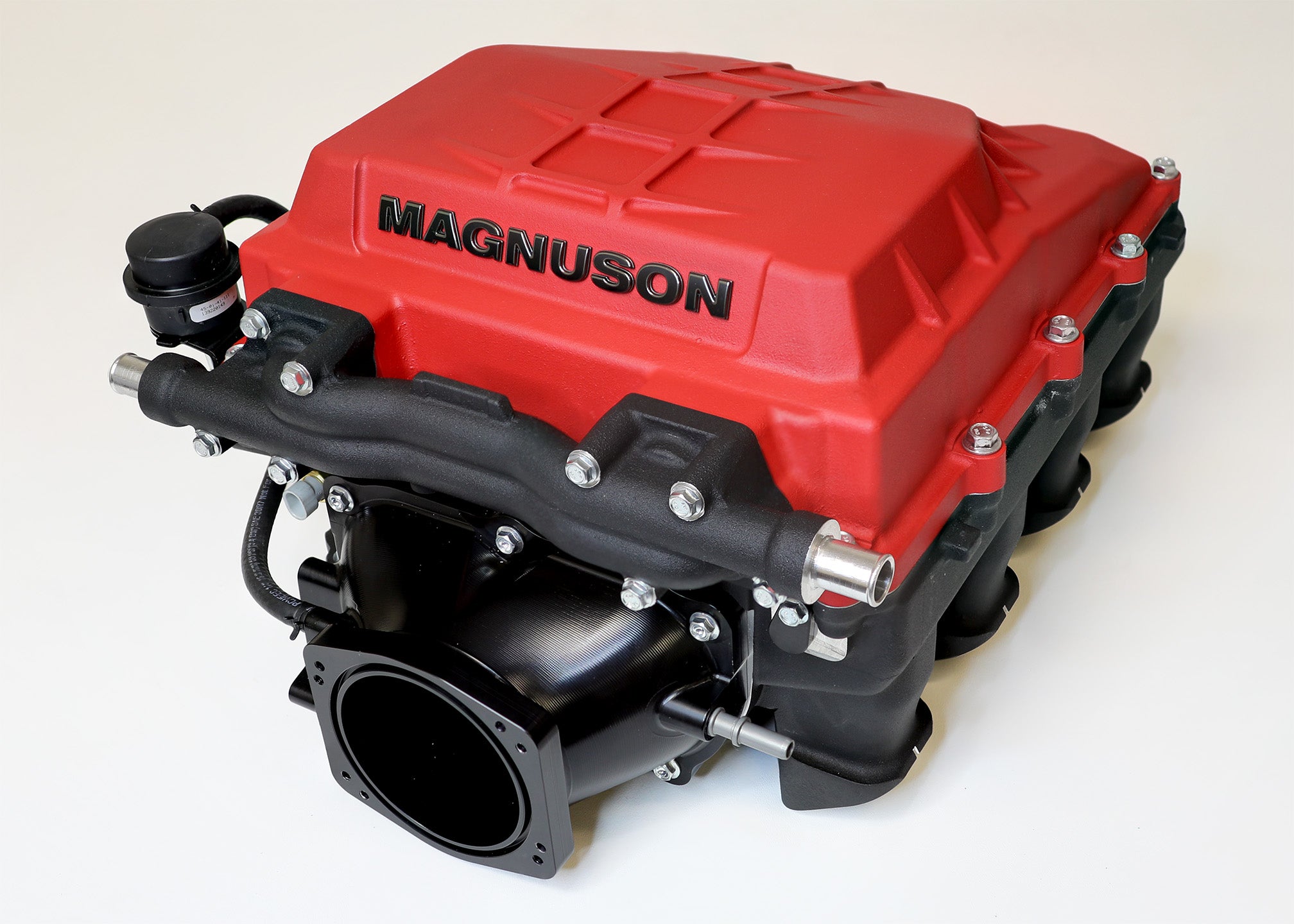
Magnum TVS2650 Supercharger Kit
Magnuson
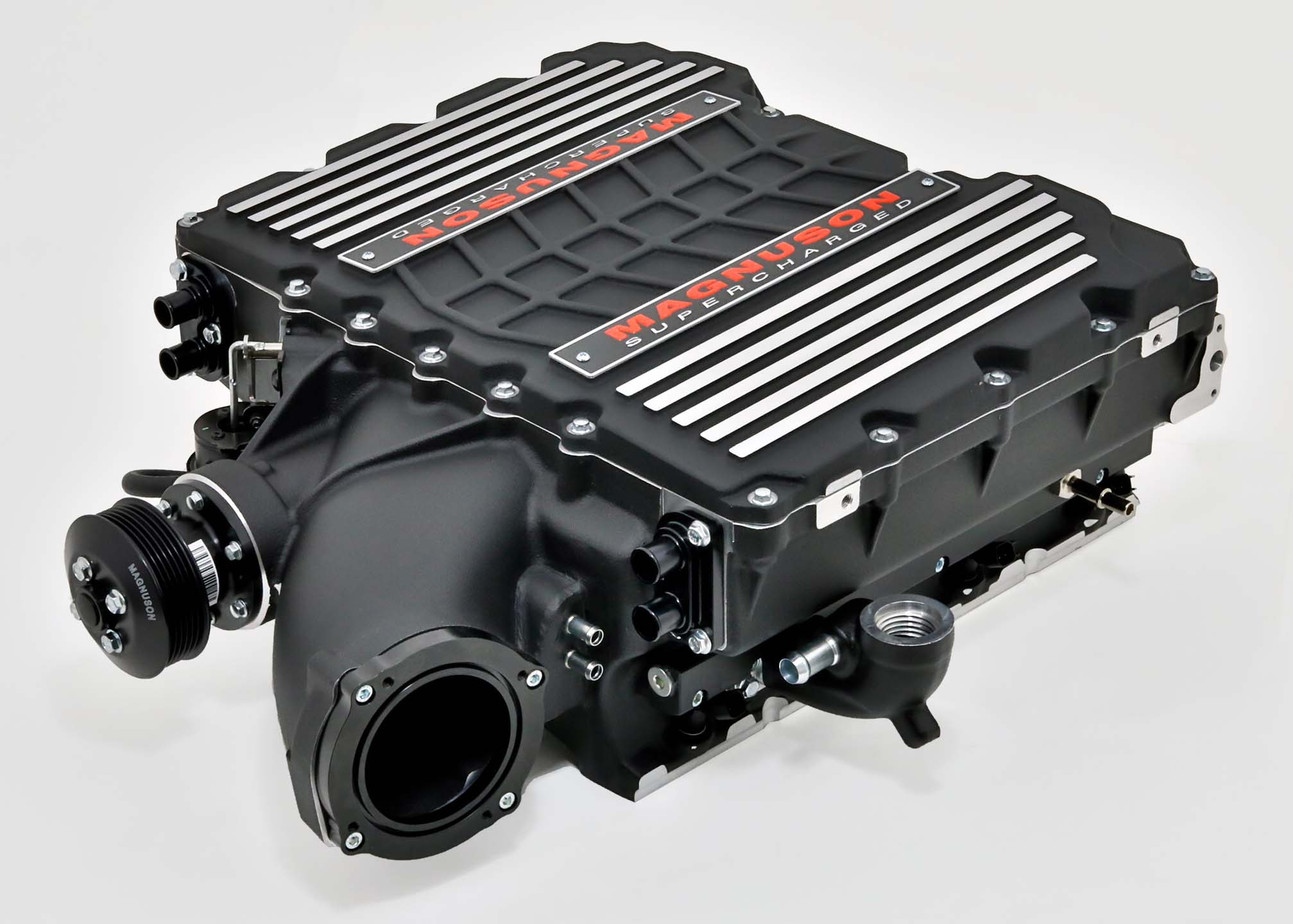
TVS2650 Magnum Performance Supercharger Kit
Whipple Superchargers
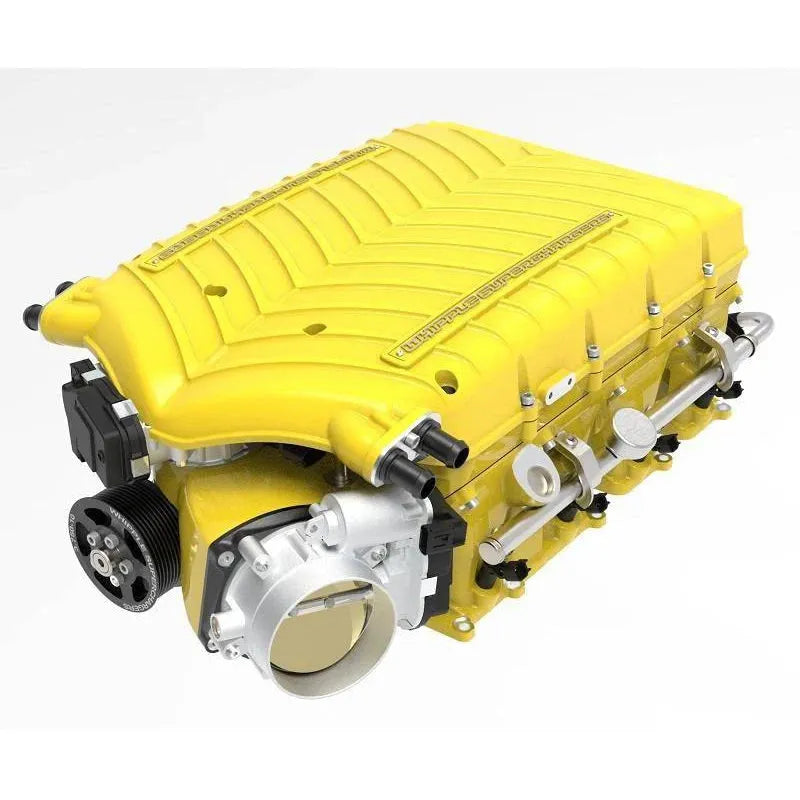
Whipple Supercharger Kit Gen 6 3.0L
All Supercharger Kits (10)
View as grid- Magnuson Magnum TVS2650 Supercharger Kit Tune required$6,495.00
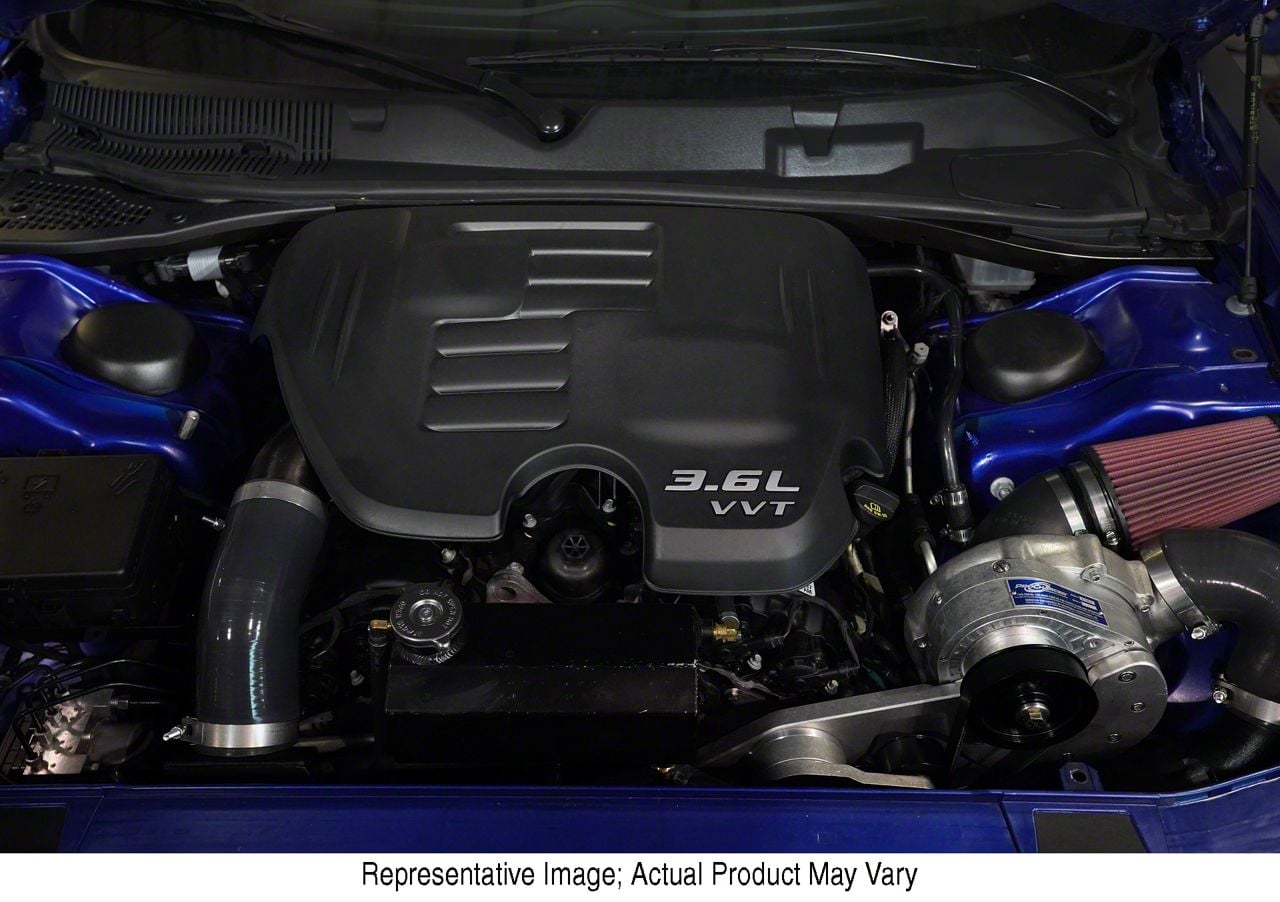 ProCharger P-1SC-1 High Output Supercharger Kit Tune required+130 HP$6,674.00
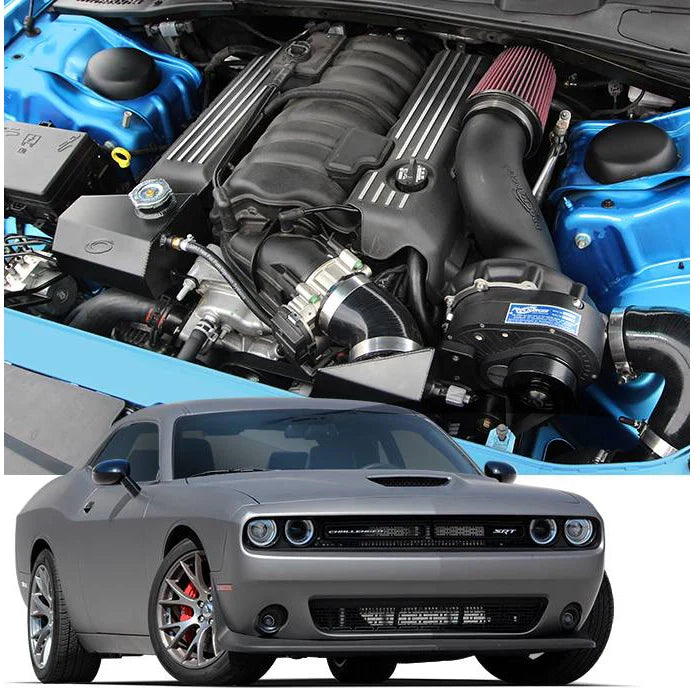 ProCharger Supercharger Kit for Dodge Challenger 6.4L 392 SRT/ScatPack/Daytona Tune required+215 HP$7,149.00
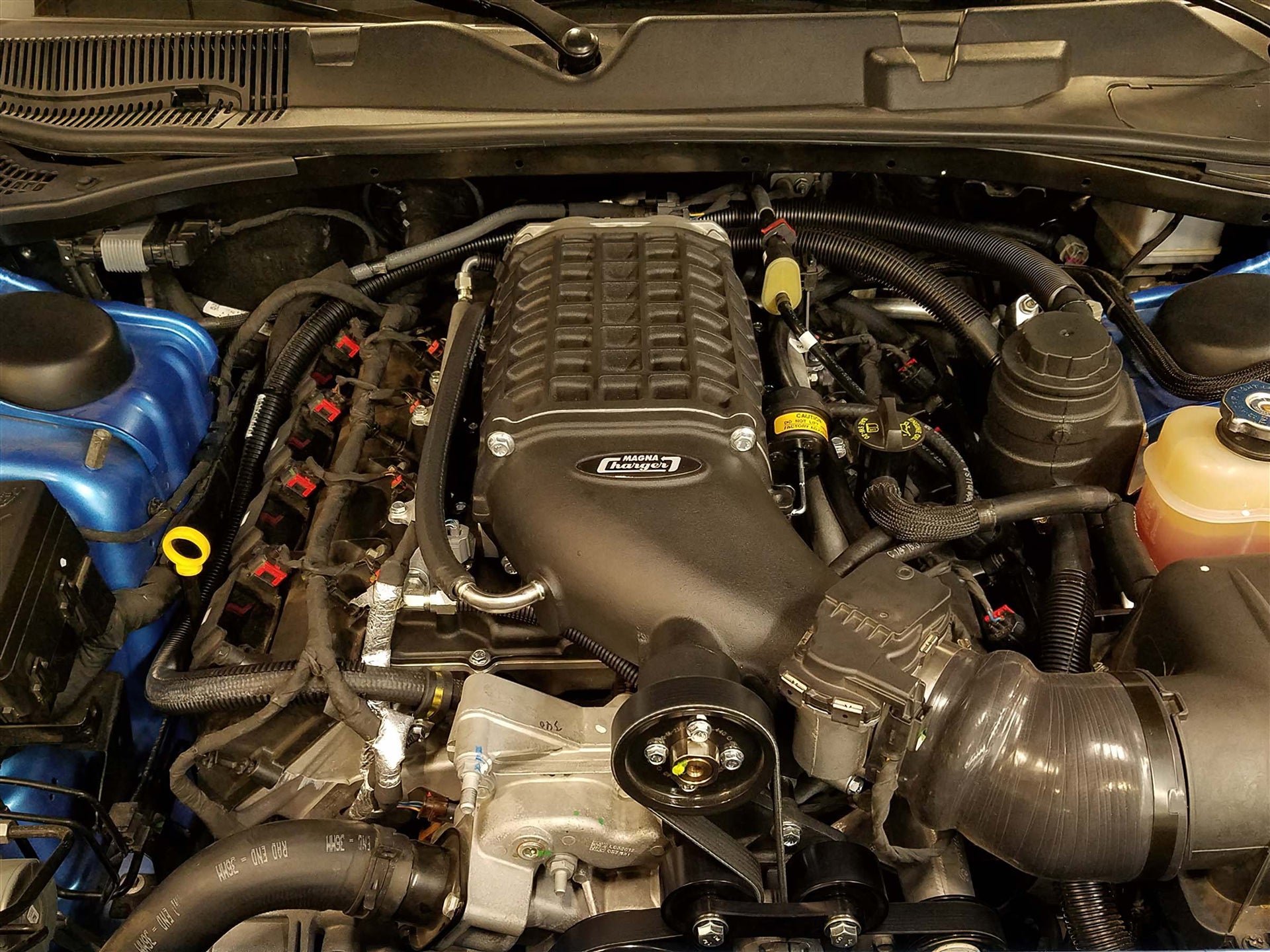 Magnuson TVS2300 Supercharger Kit Tune required+140 HP$7,595.00
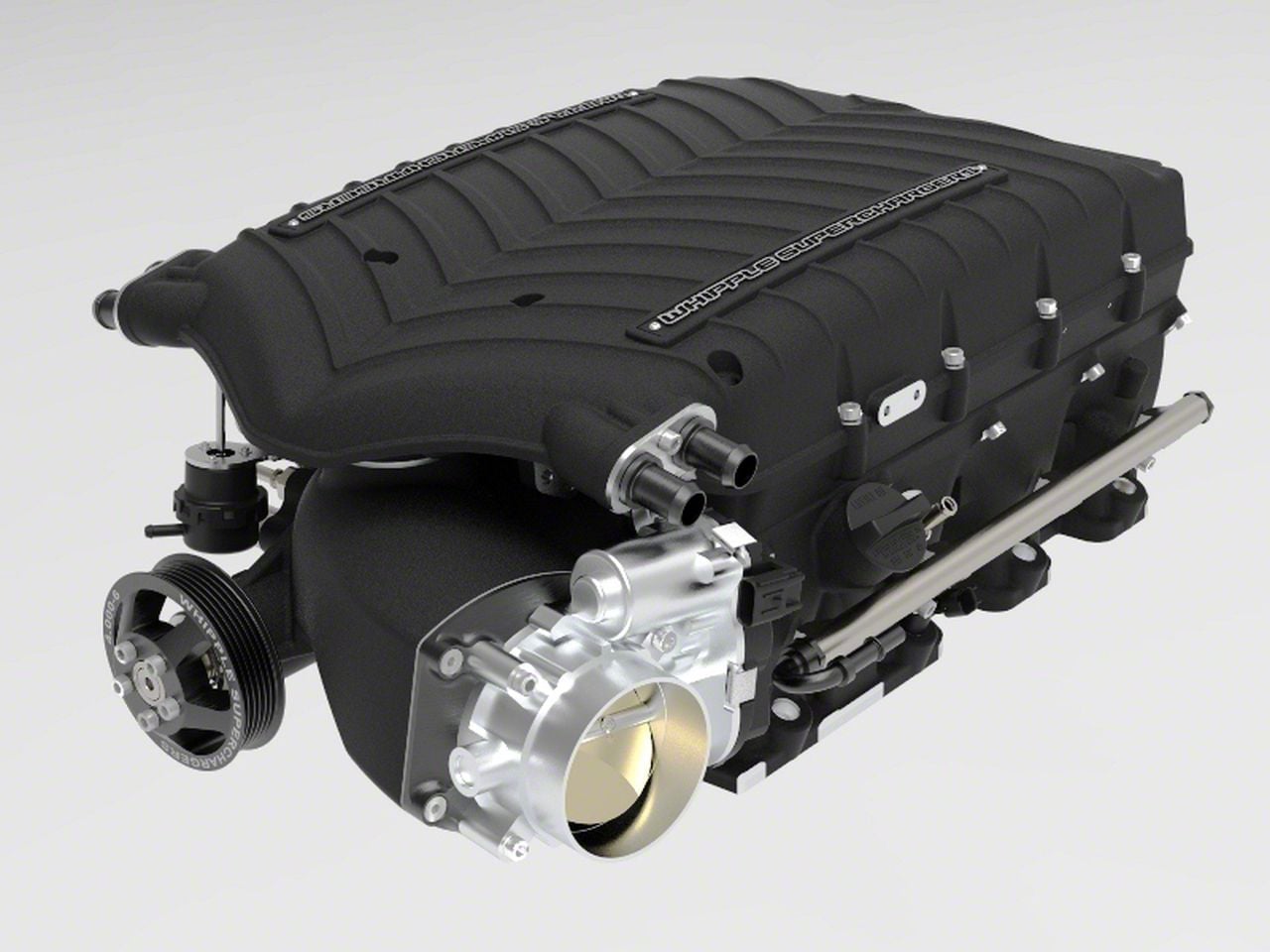 Whipple Gen 5 3.0L Supercharger Kit Tune required+200 HP$8,899.99
- Magnuson TVS2650 Magnum Performance Supercharger Kit Tune required$8,995.00
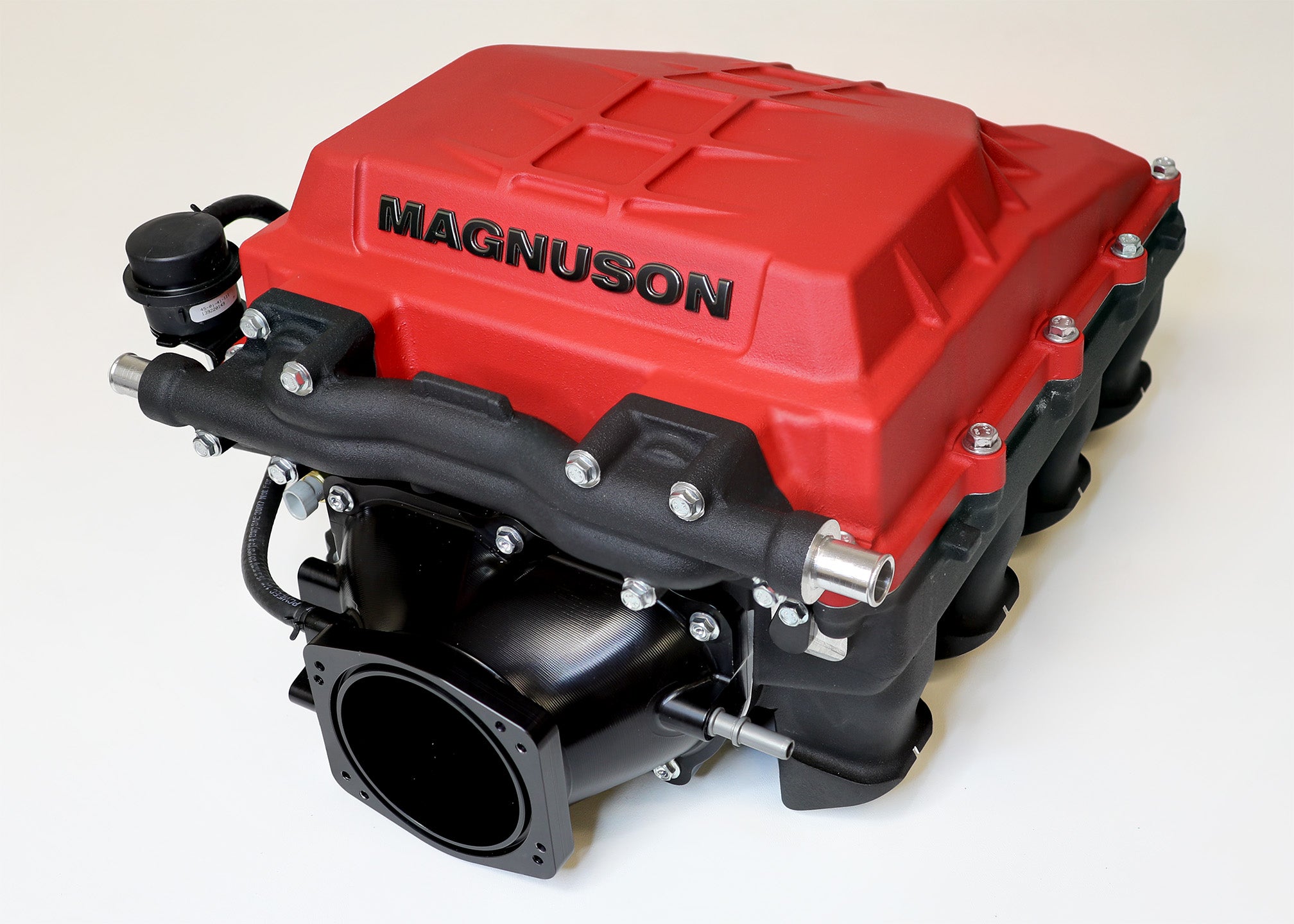 Magnuson TVS2650 HEMI Supercharger System Tune required+524 HP$8,995.00
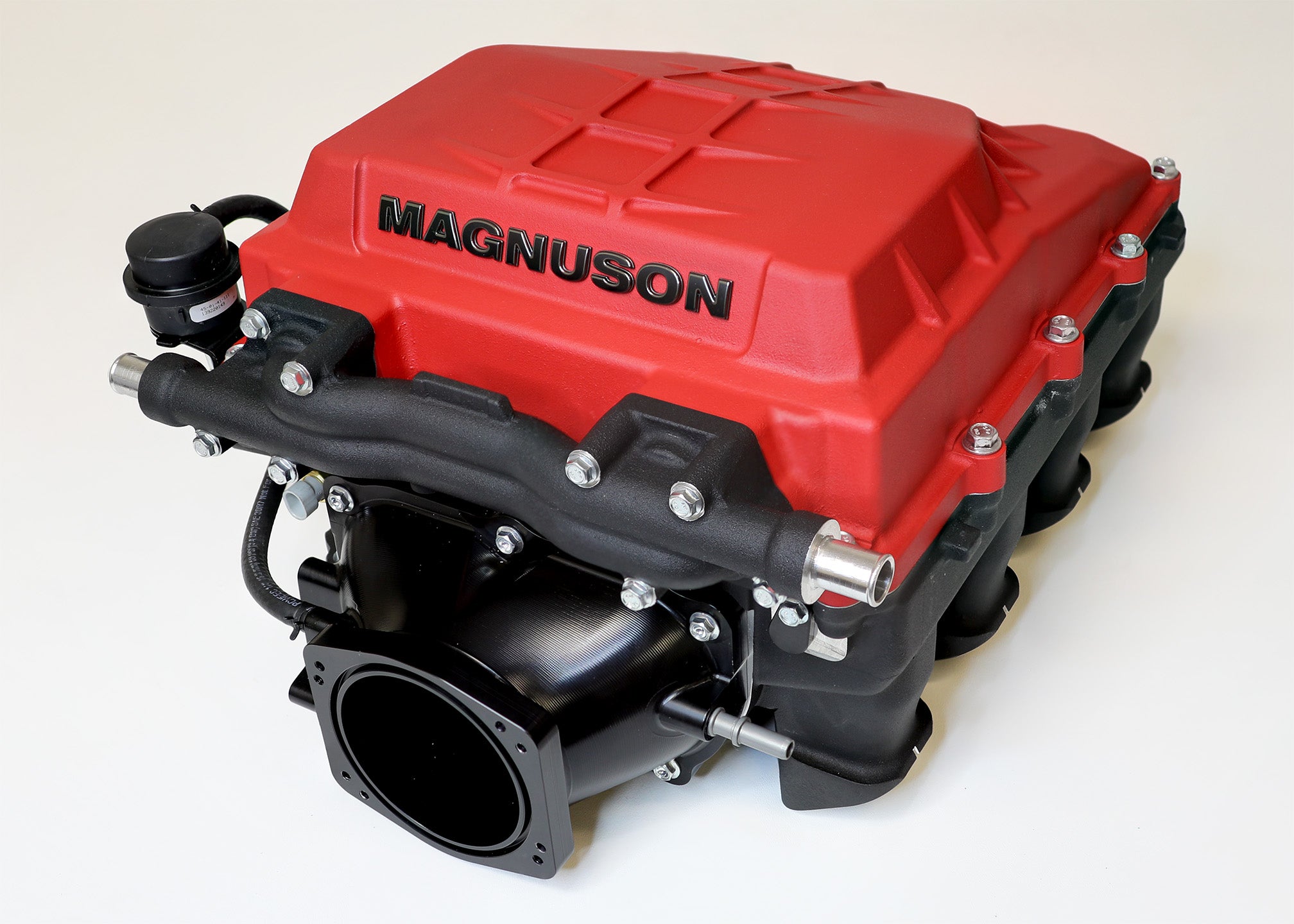 Magnuson Magnum TVS2650 Supercharger System Tune required$8,995.00
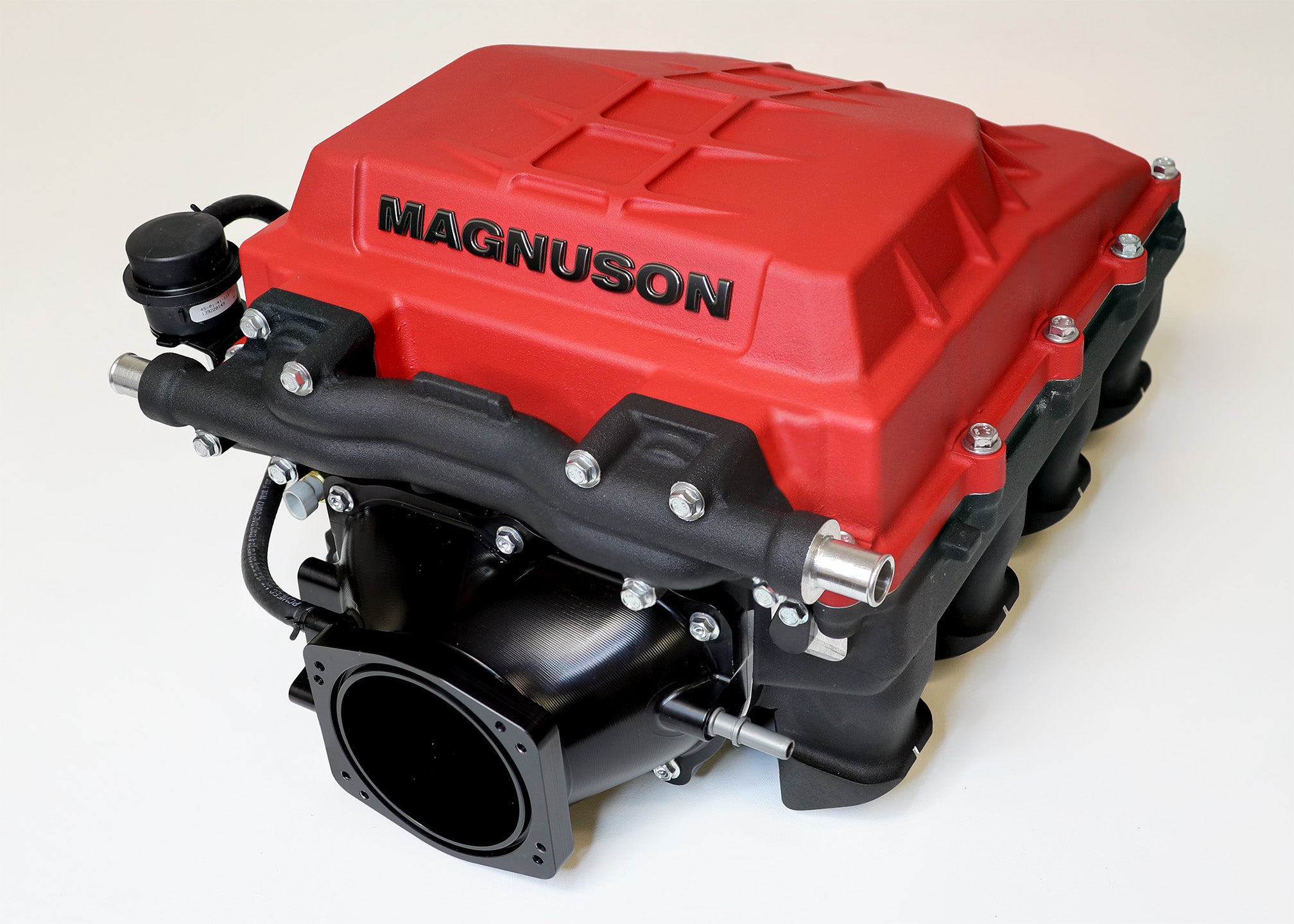 Magnuson Magnum TVS2650 Supercharger Kit Tune required+524 HP$8,995.00
- Whipple Superchargers Whipple Supercharger Kit Gen 6 3.0L Tune required$8,999.99
3. SUPERCHARGER KITS
Types of Superchargers
| Type | Examples | Power Band | Sound | Best For |
|---|---|---|---|---|
| Twin-Screw (positive displacement) | Whipple Gen 5, Magnuson TVS2650 | Strong low-to-mid torque, instant response | Whine under boost | Street driving, daily drivers |
| Roots (positive displacement) | Edelbrock E-Force | Similar to twin-screw | Aggressive blower whine | Similar to twin-screw |
| Centrifugal | ProCharger P-1SC-1, Vortech V-3 | Linear, builds with RPM | Turbo-like whistle | Track/high RPM use |
Power Numbers
| Kit | HP Gain | Engine | MSRP |
|---|---|---|---|
| Whipple Gen 5 3.0L | +200 HP | 6.4L Scat Pack | ~$9,500–$10,500 |
| Magnuson TVS2650 | +180 HP | 6.4L | ~$8,995 |
| Magnuson TVS2300 | +150 HP | 5.7L / 6.4L | ~$7,595 |
| ProCharger P-1SC-1 | +150 HP | 5.7L / 6.4L | ~$6,500–$7,500 |
| Vortech V-3 | +140–180 HP | 6.4L | ~$6,500+ |
Complete Kit vs. Tuner Kit — CRITICAL DISTINCTION
- Complete Kit: Includes blower + fuel injectors + fuel pump + tune + all hardware. Ready for a stock or lightly modified engine. Safe for beginners.
- Tuner Kit: Blower head unit ONLY. Assumes you already have custom fuel and tuning. NOT safe for beginners without extensive knowledge.
- Site must tag each product clearly. A beginner buying a Tuner Kit without knowing the difference can destroy their engine within minutes of driving under boost.
Required Supporting Mods
- Upgraded fuel injectors (sized for boost — typically 50–80% larger than stock)
- Upgraded fuel pump or pump booster (DeatschWerks, Walbro)
- MAP sensor upgrade (stock maxes at ~22 PSI)
- Custom ECU tune (MANDATORY — not optional)
- Colder-range spark plugs (prevent detonation)
- Lower thermostat / cooling upgrades (heat management critical)
Site UX Recommendations
- Red banner warning on all Tuner Kit listings: "Does not include fuel system or tune. For modified engines only."
- "What else do I need?" checklist on all supercharger pages.
- Kit type filter: Complete Kit / Tuner Kit.
- HP gain shown prominently — this is the #1 purchase driver.
21. SUPERCHARGER TYPES — DETAILED COMPARISON
Positive Displacement (Roots / Twin-Screw)
Examples: Whipple Gen 5 (twin-screw), Magnuson TVS (twin-screw), Edelbrock E-Force (roots)
How it works: Two counter-rotating rotors trap air between their lobes and push it forward into the intake. Unlike centrifugal designs, positive displacement superchargers move a fixed volume of air per rotation — meaning boost is available from idle.
Power characteristics:
- Full boost available from low RPM
- Flat, broad torque curve — power feels immediate and relentless
- Better low-to-mid range than centrifugal
- Slightly less peak top-end power vs centrifugal at same boost level
- More parasitic drag (requires more engine power to spin)
- Higher intake charge temperature (more heat generated by compression) — intercooling important
Driveability: Easy to drive. No "hit" or surge — power builds smoothly from the moment you press the throttle. Best for street cars, daily drivers, people who want tractable power.
Sound: Distinctive whine/howl that increases with RPM. The stereotypical "supercharger sound."
Centrifugal
Examples: ProCharger P-1SC-1 / D-1SC, Vortech V-3 Si
How it works: Like a turbocharger but belt-driven instead of exhaust-driven. A centrifugal impeller spins at very high speed and uses centrifugal force to compress air. Boost output increases with the square of rotational speed — meaning it builds with RPM.
Power characteristics:
- Little boost at low RPM, builds as RPM climbs
- Strong top-end power — keeps pulling through the redline
- Better peak power numbers at high RPM
- Less torque at low RPM compared to positive displacement
- More efficient (less heat generated, less parasitic drag)
- Better for already-fast builds where you want top-end horsepower
Driveability: Different feel from positive displacement. Cars that have traction issues (rear-wheel drive on street tires) can actually be easier to launch with centrifugal because power builds gradually. Less likely to immediately overwhelm traction.
Sound: Turbo-like whistle that builds with boost. Less dramatic than positive displacement whine.
Side-By-Side Comparison
| Positive Displacement | Centrifugal | |
|---|---|---|
| Low-end torque | Excellent | Moderate |
| Top-end power | Good | Excellent |
| Power onset | Immediate | Progressive |
| Heat generation | Higher | Lower |
| Sound | Whine | Whistle |
| Complexity | Replaces intake manifold | Mounts externally |
| Best use case | Street / daily driver | Track / high RPM |
| Examples | Whipple, Magnuson | ProCharger, Vortech |
Site UX Recommendations
- Filter supercharger kits by type: "Positive Displacement" vs "Centrifugal"
- Explain the power delivery difference in layman terms on each listing
- Show a "best for" tag: "Best for street driving" vs "Best for track/top speed"
20. HELLCAT-SPECIFIC MODIFICATIONS
Why Hellcat Mods Are Different
The 6.2L Hellcat already has a factory supercharger (Eaton TVS 2.4L on standard Hellcat, 2.7L on Redeye/Demon). "Adding boost" means upgrading the existing blower, not installing a new one. The fuel system is already upgraded from stock HEMI spec, but still needs attention for aggressive power levels.
Factory Hellcat Power
- Standard Hellcat: 717 HP / 656 lb-ft (2.4L Eaton blower, ~11.6 PSI)
- Hellcat Redeye: 797 HP (same 2.7L blower from Demon, higher boost)
- Super Stock: 807 HP
- Demon 170: 1,025 HP (on E85) — highest production car HP ever at launch
Bolt-On Mods (Hellcat Standard)
1. Pulley Swap — Biggest Bang for Buck
Reducing the supercharger pulley size spins the blower faster, making more boost. Every PSI of boost on a Hellcat = ~30–50 WHP.
- 3.1" upper pulley + tune: ~50 WHP gain — safe, street-driveable
- 2.82" upper pulley + 775cc injectors + Boost-A-Pump: ~100 WHP gain
- 2.64" upper + ATI lower pulley + 1000cc injectors + dual pump: ~150–200 WHP on E85
2. Cold Air Intake
JLT Intakes and Legmaker Intakes (carbon fiber) are the community favorites. Also makes the supercharger whine louder — a bonus for Hellcat owners.
3. Ported Supercharger Snout
SDG Performance porting service: ~50 WHP and ~2 PSI boost gain. Smooths and enlarges internal passages for better airflow. Pairs well with a Nick Williams 108mm throttle body.
4. Heat Exchanger Upgrade (Interchiller)
The Hellcat uses a water-to-air intercooler on top of the supercharger. Under repeated hard acceleration, the coolant in this system heat-soaks, reducing the intercooler's effectiveness and causing power to drop ("heat soak"). The IC Chiller system chills the intercooler coolant between runs for consistent power.
5. Catch Can — essential, same as other HEMIs, arguably more important under boost
Higher-Power Hellcat Upgrades
- Full Whipple 3.0L+ swap — replaces Eaton with Whipple unit. +200–300 WHP with full fuel support
- Magnuson TVS2650 swap — similar to Whipple route
- Driveshaft Shop CV driveshaft — handles 1,000+ HP; stock driveshaft is a known weak point at aggressive power levels
- Built transmission — stock 8HP90 handles bolt-ons; above 900 HP, a built trans (Sipple Speed, etc.) with reinforced clutch packs is recommended
- Differential brace — DIRS brace prevents diff failures at high power
- Wavetrac LSD — upgraded limited-slip for better traction distribution
Key Insight for Site
The Hellcat modification tree is completely different from N/A builds. Someone buying for a Hellcat should see Hellcat-specific parts, not generic HEMI parts that may not fit the blower manifold. Engine-size filtering and trim-level compatibility are critical here.